If you spend your days handling work, family, and a phone that never ever stops humming, you are exactly the person fast first aid and CPR combo courses were built for. You know you should upgrade your first aid certificate. You most likely meant to book a CPR course six months back. But the idea of losing an entire day or weekend break in a class is enough to press it off again.
There is a much better way, and it is not a shortcut in the hazardous sense. Effectively developed express first aid and cpr training classes compress the components that can be streamlined and secure the components that should never ever be hurried. The outcome is a fast first aid course that still leaves you certain, not simply compliant.
I have instructed both full day first aid courses and fast first aid training styles. I have seen the difference in just how people focus, how much they preserve, and more significantly, exactly how they act when something in fact fails. Succeeded, fast first aid and cpr courses can function in addition to standard formats. Done terribly, they generate a pocketbook card and extremely little genuine skill.
This overview walks through just how to discriminate, just how fast formats are structured, and whether a fast first aid course near you is the appropriate choice.
Why compress first aid and CPR at all?
The largest obstacle to first aid and CPR training is not rate of interest, it is time. People are not declining to discover. They are trying to press it in between shifts, childcare, commute, and the occasional attempt at sleep.
I have actually seen two extremely various kinds of people walk right into training areas. One group shows up relaxed, taking a complete day off with the blessing of their company. The various other team shows up right from a graveyard shift, inspecting their phone on every break due to the fact that they have children to accumulate or clients waiting. The 2nd group requires a fast first aid course, not because they care much less, but since their margin for excessive time is slim.

Compressing content right into fast first aid courses or express cpr courses makes good sense when:
- learners currently have some experience and require a fast cpr refresher course workplaces should certify large numbers of team without significant disruption parents and carers need express child care first aid that appreciates their schedule
The danger is that individuals begin chasing after the quickest feasible fast certification without asking what is being compressed. That is where judgment matters.
What a strong first aid and CPR combo course really covers
Regardless of pace, a first aid and cpr course that deserves your time has a couple of non negotiables. The specific structure varies by nation and regulatory authority, but core components repeat onsite first aid instructor across good programs.
Look for web content that builds 3 abilities: acknowledging an emergency early, acting decisively in the first minutes, and turning over smoothly to professional responders.
An incorporated first aid and cpr course need to offer you, at minimum:
Basic scene assessment, risk checks, and how to call for aid clearly. CPR training with hands on practice, consisting of compressions, breaths (if called for by your standard), and AED use. Management of choking, consisting of for infants and youngsters if the course covers childcare. Control of bleeding, consisting of straight pressure, injury care basics, and when to make use of a tourniquet if your territory allows it. Recognition and basic first aid for usual clinical emergency situations such as cardiac arrest, stroke, bronchial asthma flare, anaphylaxis, diabetic emergency situations, seizures, and shock.Many first aid courses add web content on burns, cracks and strains, head injuries, spine precautions, and environmental problems like hypothermia or warm ailment. Express first aid courses occasionally trim the listing, so inspect that any conditions relevant to your environment are covered.
Here is the vital component. Fast first aid courses need to still prioritize skill practice over easy listening. A fitness instructor can speak about CPR for 10 minutes. That does not imply you can do it at 2 a.m. In a car park. Ability comes from pressing on a manikin, locating the best deepness and rhythm, listening to the click, and correcting your very own posture.
When you contrast first aid and cpr courses, pay less focus to how many subjects the sales brochure listings, and even more attention to how much time is assigned for actual practice.
How fast first aid and CPR combo courses are structured
Most fast first aid course carriers tighten the timetable in two means: they relocate theory online and they improve practice in the class. The balance between those two is what separates a really effective express first aid course from a box ticking exercise.
A common pattern appears like this:
You receive accessibility to online pre knowing modules covering the theory. That could include brief videos, interactive quizzes, and analysis on topics like legal duties, fundamental composition, and acknowledgment of particular problems. You finish this self paced area prior to participating in the one-on-one component.
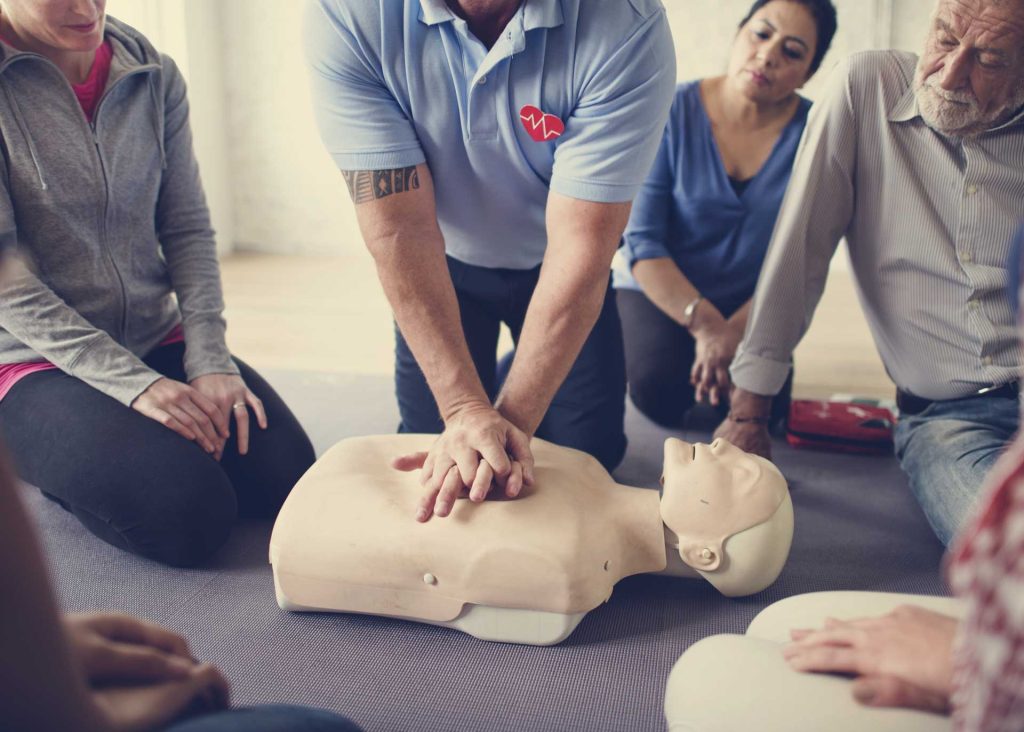
Then you participate in a shorter, often half day, practical session. This is where you do CPR training on manikins, run through first aid scenarios, and obtain straight responses from a teacher. The instructor can then spend time mentoring and testing skills instead of lecturing.
From the outside, this is marketed as express first aid training or a fast cpr course. Inside, the company has shifted where the time is spent. A traditional full day first aid training course could offer you 6 to seven hours in a room with a fitness instructor, blending theory and technique. A fast first aid and cpr course might offer you three to four hours in person, plus two to four hours online.
When this mixed approach works well, participants show up having in fact done the online work. The class really feels energetic, concentrated, and reliable. When it stops working, they turn up at the door confessing they missed the pre course units and are attempting to bluff their means through.

If you understand you have problem with self paced online understanding, be honest with on your own. You might be better served by a solitary lengthy day with all content provided live, as opposed to registering for a fast certification layout that relies on your self-control at home.
Where speed helps, and where it hurts
I once instructed a team of childcare employees in two styles, a standard 2 day childcare first aid course one year, and an express child care first aid course with combined distribution the next. The material was basically the very same. What altered was pacing.
A couple of observations that have actually applied with other groups given that:
First, attention is much better in much shorter, concentrated bursts. A fast first aid training block of 4 hours devoted to hands on practice commonly generates sharper, a lot more realistic efficiency in situations than a group that has listened to theory talks since 9 a.m. And is exercising at 3 p.m.
Second, complex circumstances require time to breathe. Express childcare first aid training that presses baby and kid CPR, choking administration, bronchial asthma plans, anaphylaxis drills, and head injury scenarios right into a solitary short session can feel hurried. People bear in mind a couple of points clearly and blur the rest.
Third, reflection matters. In longer first aid and cpr training classes, there is room to stop after a situation and speak about emotional responses. The very first time someone methods CPR on a youngster manikin or runs a scenario including a co employee having a cardiac arrest, it stimulates fears and memories. Fast first aid course formats have a tendency to cut those discussions brief to stay on routine. That can decrease long term confidence, even if short term efficiency is fine.
So of course, there are real advantages to a fast first aid or express cpr format, however there is an expense if every min is cut away. The best suppliers protect time for debriefing and questions, also in a pressed schedule.
Fast combination courses for different groups
Not every student arrives with the same demands. The appropriate sort of fast first aid course for a white-collar worker is not always the ideal fit for a moms and dad of a clinically intricate youngster or a person working on a building and construction site.
Office groups frequently take advantage of fast first aid courses that focus on usual workplace injuries, medical emergency situations, and strong CPR training. On-line modules can effectively cover plan, paperwork, and lawful elements. The in person express first aid courses can then pierce functional abilities pertinent to that workplace, like utilizing the AED model on website or handling a seizure in a crowded open strategy floor.
Childcare instructors usually need more extensive useful web content. Express child care first aid courses that meet regulative standards consist of infant and child CPR, choking, anaphylaxis, bronchial asthma, and head injury monitoring. Right here, a completely on the internet fast first aid course is not proper. Nevertheless, a mixed express childcare first aid course that takes care of history theory online and reserves the in person section for kid focused situations can work extremely well, as long as the sensible block is lengthy enough.
Healthcare and aged care workers frequently come to first aid and cpr courses with previous direct exposure. For them, fast cpr correspondence course make sense. They may use CPR in a clinical setup, however still require annual or biannual sign off that meets office or professional body requirements. These fast cpr courses have a tendency to concentrate on top quality compressions, AED usage, and any modifications in nationwide resuscitation guidelines since their last training. A fast cpr refresher course can typically be as brief as one to two hours if built on a strong base.
Parents, carers, and neighborhood participants are a combined group. Some are very motivated and prepared to spend a complete day in a first aid course. Others will only attend if there is a brief, clear express cpr course or express first aid course that matches their weekend break. In neighborhood setups, I have actually seen good results with brief, extremely practical sessions concentrating on choking, infant and kid CPR, high temperature seizures, and when to seek immediate treatment. These may not result in an official first aid certificate, but they can be the difference between panic and efficient activity in a crisis.
Construction, manufacturing, and remote job setups sit at the contrary end. Workers there often require extended first aid courses with more depth, consisting of trauma administration and environmental direct exposure. Fast first aid courses can still play a role for refresher rounds, yet initial credentials normally needs to not be rushed.
What "fast" ought to never ever mean
The problem with advertising terms like fast first aid, express first aid, or fast certification is that they seem like a race. Individuals visualize something like a 90 minute on the internet test and a certificate, and some companies oblige.
Here is where I see the line in between reliable and unsafe:
If a supplier supplies fast cpr courses entirely on the internet with no practical part, beware. Enjoying a video of compressions is not the same as really feeling the resistance of a chest and finding out the proper deepness. A lot of reputable bodies still call for at least some in person analysis for CPR training.
If a course promises to cover complete first aid and cpr in an extremely brief overall time, ask what has actually been eliminated. An express first aid course of 2 or three hours that declares to meet all workplace requirements in one resting is usually either missing needed content or skimping on hands on practice.
If a company guarantees a pass without real analysis, deal with the resulting first aid certificate as a piece of paper, not a measure of your skill. Appropriate first aid and cpr training classes include some form of skills presentation and, typically, a short expertise check.
Speed has to be made by effectiveness, not paid for by cutting out the parts that help you work under pressure.
How to choose a credible fast first aid and CPR provider
When individuals look for a fast first aid course near me, the list can be overwhelming. Every link declares to be nationwide, certified, or "relied on by thousands". Under the branding, a couple of practical checks aid arrange the serious suppliers from the rest.
Here is a brief list you can utilize prior to you book:
Confirm that the provider is acknowledged by the pertinent nationwide or local regulatory authority, or by your office or specialist body. Look for a clear outline of course length, broken down into online and face to face elements, not just an unclear "half day". Check that CPR training includes hands on experiment manikins and AED trainers, not just video clip instruction. Make sure the certificate released is clearly accepted for your purpose, whether that is workplace compliance, child care policy, or a specific market requirement. Read recent evaluations that discuss teaching quality and functional scenarios, not just on the venue or refreshments.If a course is marketed as fap first aid or with another unknown acronym, take a minute to browse what that in fact indicates in your jurisdiction. Some acronyms define particular first aid frameworks or regional criteria. Others are just branding.
When doubtful, ask direct inquiries. Respectable service providers will certainly address clearly and explain how their fast first aid courses satisfy the very same requirements as longer formats.
What to anticipate on the day of a fast combo course
Even in express cpr courses or fast first aid courses, the face to face session can feel extreme. Pace is quicker, breaks are shorter, and there is less time to drift. That is usually a good idea, but it helps to show up prepared.
You can expect a short review of vital ideas from the online component. Good instructors keep this brisk and interactive, asking individuals to define steps in first aid, instead of delivering a complete re lecture.
Most of the time is after that invested relocating between skill stations and situations. You may turn via CPR on grown-up, youngster, and baby manikins, choking drills, hemorrhaging control, and use of an AED. Situations frequently include function play. One participant works as the casualty or a bystander, while one more responds using the taught skills. The instructor observes and coaches.
Compared with longer first aid training, there may be less repeated runs of the same CPR plus first aid certification course scenario. You may obtain one or two possibilities to execute complete CPR with an AED, instead of numerous. This is why your own involvement issues. Use every rep to tune your depth, rate, and hand placement. Ask for feedback.
Assessment in fast first aid and cpr courses generally happens constantly. The comprehensive training for CPR and first aid instructor enjoys your method throughout, rather than dividing an official examination at the end. That can actually minimize anxiety, because you are being assisted all the way.
You walk out with your first aid certificate either published on the day or emailed later, usually with electronic confirmation. More significantly, if the course was run well, you entrust to muscular tissue memory that feels remarkably solid, even after a few hours of practice.
Keeping abilities fresh after a fast course
Every instructor has actually fulfilled individuals happily presenting a faded first aid certificate from 5 years ago, clarifying that they when did a first aid and cpr course so they are "covered". The paper might still be clear. The abilities are likely not.
Research and functional experience both reveal that CPR performance wears away considerably within months otherwise freshened. The same holds true for numerous first aid treatments. Fast first aid courses aid by making refresher courses much more practical, however only if you in fact go to them.
Fast cpr correspondence course, typically 1 to 2 hours, are suitable for covering up compression high quality, AED usage, and any kind of upgraded guidelines. For basic first aid, a shorter express first aid training session every number of years keeps you certain with bandaging, bleeding control, and emergency situation recognition. Many regulatory authorities and employers specify a renewal duration, frequently every 1 to 3 years, relying on the level of certification.
Between formal courses, a couple of behaviors assist keep the expertise available when you need it. Sometimes gone through the fundamental steps in your head while walking past the workplace first aid set or AED. If your service provider uses access to refresher video clips or micro learning modules, use them. Some individuals even exercise compressions on a firm pillow at home to maintain the feeling of the rhythm.
Fast first aid and express cpr courses just continue to be efficient over the long term if coupled with normal refresh. Practical formats are an asset below. It is less complicated to devote to a short session each or two years than to block another long day.
When a fast style is not the appropriate choice
Despite all their advantages, fast first aid and cpr courses are not global remedies. Some circumstances genuinely require more time in a space with a trainer.
If you are entirely brand-new to first aid, awkward with emergencies, or nervous concerning your capability to find out functional skills, a full length first aid training course could offer you better. Having additional time to ask questions, repeat situations, and resolve nerves can make the distinction in between theoretical knowledge and functional confidence.
If your function includes a high risk setting, such as remote work websites, heavy sector, or wilderness assisting, you likely require expanded, circumstance abundant training. Fast first aid courses can supplement, but not replace, much more thorough remote or innovative first aid programs.
If your net gain access to is unstable or you struggle with on-line discovering systems, a combined model that leans greatly on pre course e finding out might frustrate you. Because situation, ask whether the carrier uses a fully one-on-one variation of the exact same first aid and cpr course, even if it takes slightly longer.
The right course appreciates both your time and the severity of what you are finding out. It must extend you just sufficient that you leave worn out but qualified, not hurried and uncertain.
Making the most of a fast first aid and CPR combo course
Choosing an express first aid course or fast cpr choice is not around pc gaming the system. It has to do with suitable crucial skills right into a life that is already full.
A well developed mixed first aid and cpr course in a fast style gives you two core benefits. Initially, you gain immediate, useful competence to act in the initial mins of an emergency. Second, you gain a path to maintain that capability current with convenient refreshers.
If you treat the on-line components seriously, arrive rested enough to take part, and use every minute of practice, a fast first aid course can offer you along with a longer layout. The key is to respect the material, even when the schedule is tight.
When you sign up, you are not simply chasing a first aid certificate. You are spending a few concentrated hours to ensure that when an associate breaks down, a kid chokes, or an unfamiliar person quits breathing at a bus stop, you are greater than an onlooker. You are the individual who understands what to do next.